




4 inch gate valve Performance Analysis
Introduction
A 4-inch gate valve is a critical component in fluid handling systems, primarily utilized to isolate or regulate the flow of liquids or gases within pipelines. Positioned downstream of control valves and frequently employed in applications demanding minimal pressure drop, gate valves are distinguished by their disk-shaped closure member that slides perpendicularly to the flow path. Unlike other valve types, gate valves are not typically used for throttling due to the high-velocity fluid erosion potential on the disk and seat. Their technical position within the industrial chain centers on fluid conveyance, process control, and safety systems, bridging upstream fluid sources with downstream processing or consumption points. Core performance characteristics include tight shut-off capabilities, minimal flow restriction when fully open, and robust construction to withstand varying pressure and temperature conditions. The selection of appropriate materials and designs is paramount to ensure reliable operation and longevity in specific application environments. A major industry pain point revolves around minimizing fugitive emissions and ensuring long-term sealing integrity, particularly in hazardous media applications.
Material Science & Manufacturing
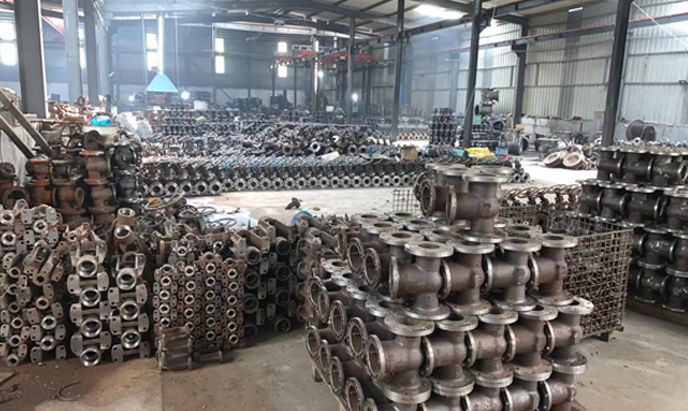
The body of a 4-inch gate valve is commonly manufactured from carbon steel (ASTM A105, A350), stainless steel (304, 316, Duplex), or alloy steel (e.g., ASTM A182 F22) depending on the fluid compatibility and operating conditions. Carbon steel offers cost-effectiveness for non-corrosive applications, while stainless steel provides enhanced corrosion resistance in aggressive environments. Alloy steels are utilized for high-temperature or high-pressure scenarios. The disk is typically fabricated from materials similar to the body, often with a resilient seat material like reinforced PTFE, EPDM, or metal-to-metal sealing. The stem, responsible for linear actuation, is usually constructed from stainless steel (304, 316) for durability and resistance to galling. Manufacturing processes involve investment casting, forging, or machining of the valve body followed by precision machining of internal components. The gate itself is often cast or forged. Welding procedures (SMAW, GTAW) are critical for joining body components, adhering to ASME Section IX standards. Key parameter control includes heat treatment to achieve desired material hardness and microstructure, non-destructive testing (NDT) like radiography and ultrasonic testing to identify defects, and surface finishing to ensure smooth operation and sealing. Hydrostatic testing is a standard quality control measure to verify body integrity under pressure. Corrosion resistance is a primary concern; passivation treatments for stainless steel components are vital for maximizing resistance to pitting and crevice corrosion. Material selection impacts the valve's resistance to erosion from particulate-laden fluids and its ability to withstand thermal cycling.
Performance & Engineering
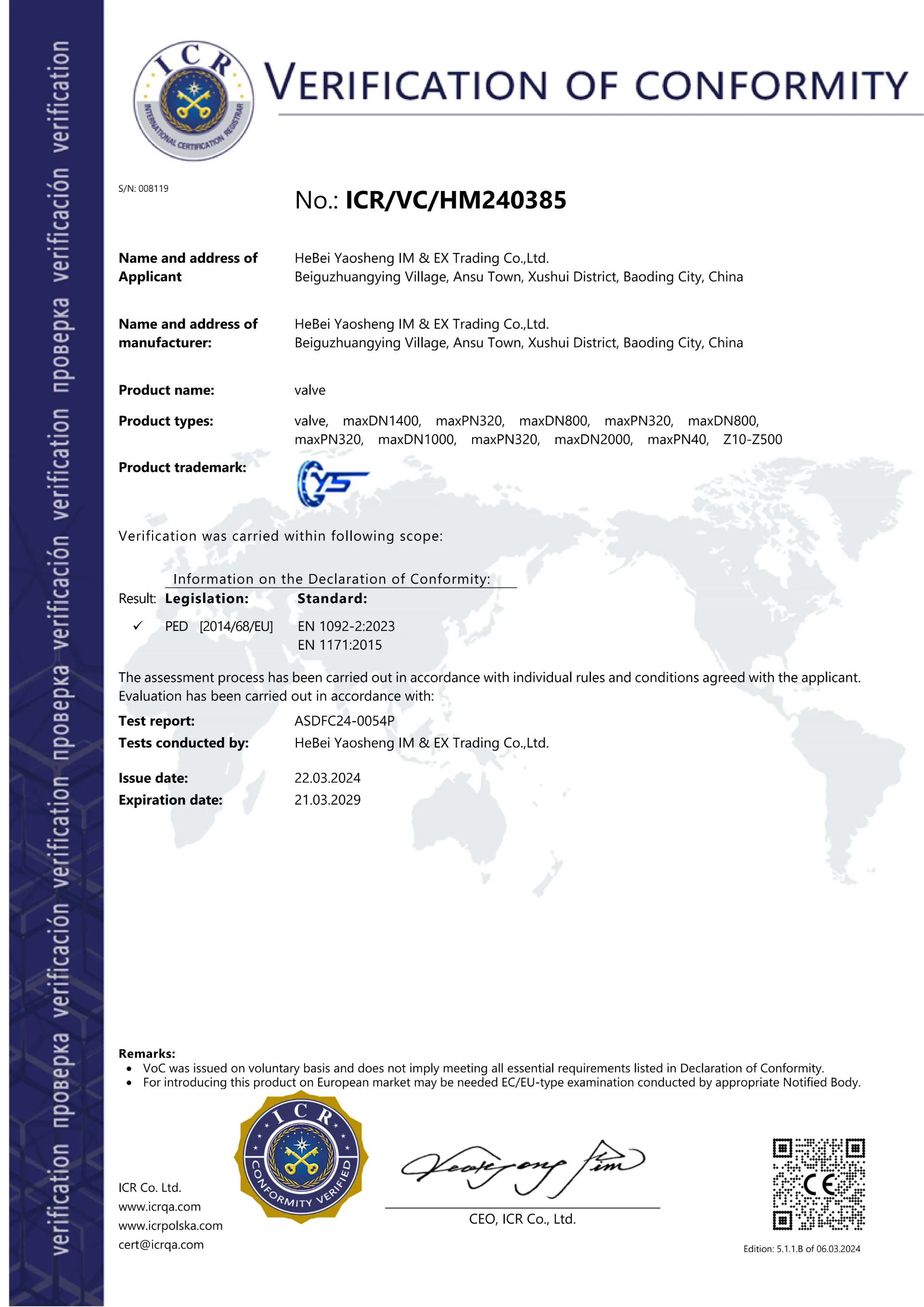
The performance of a 4-inch gate valve is governed by fundamental principles of fluid dynamics and structural mechanics. Force analysis considers the hydrostatic forces exerted by the fluid on the gate and body, as well as the mechanical forces generated during actuation. Valve seat design is crucial for achieving tight shut-off; angled seats and resilient materials minimize leakage. Environmental resistance is paramount; valves operating in corrosive atmospheres require protective coatings (epoxy, PTFE lining) to prevent material degradation. Compliance requirements include adherence to API 600 (Steel Gate Valves) and ASME B16.34 (Valve Pressure Testing). Functional implementation involves selecting the appropriate actuator – manual handwheel, gear operator, pneumatic actuator, or electric motor – based on torque requirements and control system integration. Cavitation, a phenomenon causing erosion due to vapor bubble collapse, is a significant concern in high-velocity applications; proper valve sizing and flow control are essential to mitigate this risk. The valve’s pressure-temperature rating (e.g., ASME Class 150, 300, 600) dictates its safe operating limits. Finite element analysis (FEA) is used during the design phase to optimize structural integrity and predict stress distribution under various loading conditions. Fugitive emissions compliance (e.g., EPA Method 21) is a growing requirement, driving the adoption of low-emission packing designs and sealing technologies.
Technical Specifications
| Parameter | Unit | Typical Value (Carbon Steel) | Typical Value (316 Stainless Steel) |
|---|---|---|---|
| Nominal Pipe Size | inch | 4 | 4 |
| Pressure Rating | PSI | 150 – 600 | 150 – 600 |
| Body Material | - | ASTM A105 | ASTM A351 CF8M |
| Disk Material | - | ASTM A105 | ASTM A351 CF8M |
| Seat Material | - | RTFE, EPDM | RTFE, EPDM |
| Connection End | - | Welded End, Flanged (ASME B16.5) | Welded End, Flanged (ASME B16.5) |
| Maximum Operating Temperature | °F | 450 | 650 |
Failure Mode & Maintenance
Common failure modes for 4-inch gate valves include seat erosion due to high-velocity flow, disk sticking caused by corrosion or debris accumulation, stem packing leakage resulting in fugitive emissions, and body distortion from excessive pressure or thermal stress. Fatigue cracking can occur in welded joints under cyclic loading. Corrosion, particularly pitting corrosion in chloride-rich environments, leads to material degradation and eventual failure. Delamination of resilient seat materials is also observed over time. Oxide formation on valve stems leads to operational difficulty. Preventive maintenance involves regular inspection of the valve body for corrosion, checking stem packing for leaks and replacing as necessary, lubricating the stem and disk for smooth operation, and performing hydrostatic testing to verify body integrity. Failure analysis should focus on identifying the root cause – corrosion, erosion, mechanical stress, or material defect. Repair options include replacing the seat, disk, or stem packing. If the valve body is severely corroded or damaged, complete replacement is often the most cost-effective solution. Regular cycling of the valve helps prevent sticking and ensures proper operation. Proper cleaning of the fluid stream before it enters the valve minimizes erosion. Implementing a corrosion monitoring program is also crucial.
Industry FAQ
Q: What is the primary difference between a gate valve and a ball valve in terms of flow characteristics and application suitability?
A: Gate valves offer minimal flow restriction when fully open, resulting in lower pressure drop, making them ideal for applications requiring uninterrupted flow. Ball valves, however, exhibit higher flow resistance but provide faster on/off operation and are better suited for frequent actuation and throttling services. Gate valves aren't designed for throttling due to potential disk erosion.
Q: How does the choice of seat material impact the leakage rate and operating temperature range of a 4-inch gate valve?
A: Seat material significantly influences leakage rates. Resilient seats (RTFE, EPDM) provide tighter shut-off but have temperature limitations. Metal-to-metal seats offer higher temperature resistance but may exhibit slightly higher leakage rates. The selection depends on the fluid type and operating temperature.
Q: What non-destructive testing (NDT) methods are commonly employed during the manufacturing of a 4-inch gate valve to ensure weld integrity?
A: Radiographic testing (RT) is used to detect internal flaws in welds. Ultrasonic testing (UT) assesses weld quality and detects subsurface defects. Liquid penetrant testing (PT) identifies surface cracks and discontinuities. Magnetic particle testing (MT) is also used to detect surface and near-surface defects in ferromagnetic materials.
Q: What are the key considerations when selecting a gate valve actuator for remote operation in a hazardous environment?
A: Explosion-proof actuators (certified for use in hazardous areas) are crucial. The actuator's torque capacity must match the valve’s operating torque. Pneumatic or electric actuators are common choices, considering power availability and control system integration. Redundancy and fail-safe mechanisms are important for safety.
Q: What is the significance of API 600 certification for a 4-inch gate valve, and what does it guarantee?
A: API 600 certification demonstrates compliance with industry standards for gate valve design, manufacturing, and testing. It guarantees that the valve meets defined performance criteria for pressure, temperature, leakage, and material quality, assuring reliability and safety in its intended application.
Conclusion
The 4-inch gate valve remains a cornerstone of fluid handling systems across diverse industries. Its core function—reliable isolation—is predicated on precise material selection, robust manufacturing processes, and adherence to rigorous industry standards. Understanding the interplay between fluid dynamics, material science, and potential failure modes is essential for optimizing valve performance and ensuring long-term operational integrity.
Future advancements in gate valve technology will likely focus on developing improved sealing materials to minimize fugitive emissions, incorporating smart sensors for predictive maintenance, and utilizing advanced coatings to enhance corrosion resistance. Continued innovation in valve actuation systems will also be critical for enabling remote operation and improving process control efficiency. A proactive maintenance approach, informed by thorough failure analysis, remains paramount for maximizing valve lifespan and minimizing downtime.
-
Top Reasons to Choose a Stainless Steel Flange Check Valve for Industrial Applications
-
1 4 in check valve Performance Engineering
-
check valve 3 4 Performance Analysis
-
11 2 check valve Performance Analysis
-
spring check valve Material Science Manufacturing
-
DN100 Flange Performance Analysis
-
DN50 Flange Performance Analysis
-
double flanged butterfly valve Performance Analysis
-
forged flanges Performance Analysis
-
4 blind flange Performance Engineering
-
3 flanged ball valve Performance Analysis
-
2 threaded flange Performance Analysis
-
4 ball valve flanged Performance Analysis
-
90 degree flange elbow Performance Analysis
-
Custom Flanges Performance Analysis
 Afrikaans
 Albanian
 Amharic
 Arabic
 Armenian
 Azerbaijani
 Basque
 Belarusian
 Bengali
 Bosnian
 Bulgarian
 Catalan
 Cebuano
 Corsican
 Croatian
 Czech
Czech
 Danish
 Dutch
Dutch
 Esperanto
 Estonian
 Finnish
 French
 Frisian
 Galician
 Georgian
 German
 Greek
Greek
 Gujarati
 Haitian Creole
 Hausa
Hawaiian
Hausa
Hawaiian
 Hebrew
 Hindi
Hindi
 Miao
Miao
 Hungarian
 Icelandic
 Igbo
Igbo
 Indonesian
 Irish
Irish
 Italian
 Japanese
 Javanese
Kannada
Javanese
Kannada
 Kazakh
 Khmer
Khmer
 Rwandese
 Korean
 Kurdish
 Kyrgyz
 Lao
Lao
 Latin
Latin
 Latvian
 Lithuanian
 Luxembourgish
 Macedonian
 Malgashi
 Malay
Malay
 Malayalam
 Maltese
 Maori
Maori
 Marathi
 Mongolian
 Myanmar
 Nepali
 Norwegian
 Norwegian
 Occitan
 Pashto
 Persian
 Polish
 Portuguese
Punjabi
Portuguese
Punjabi
 Romanian
 Russian
 Samoan
 Scottish Gaelic
 Serbian
 Sesotho
 Shona
Shona
 Sindhi
 Sinhala
 Slovak
 Slovenian
 Somali
 Spanish
 Sundanese
 Swahili
 Swedish
Tagalog
Swedish
Tagalog
 Tajik
Tajik
 Tamil
Tamil
 Tatar
Tatar
 Telugu
 Thai
Thai
 Turkish
 Turkmen
 Ukrainian
 Urdu
Urdu
 Uighur
 Uzbek
Uzbek
 Vietnamese
 Welsh
Welsh
 Bantu
Bantu
 Yiddish
 Yoruba
 Zulu
Zulu
 English